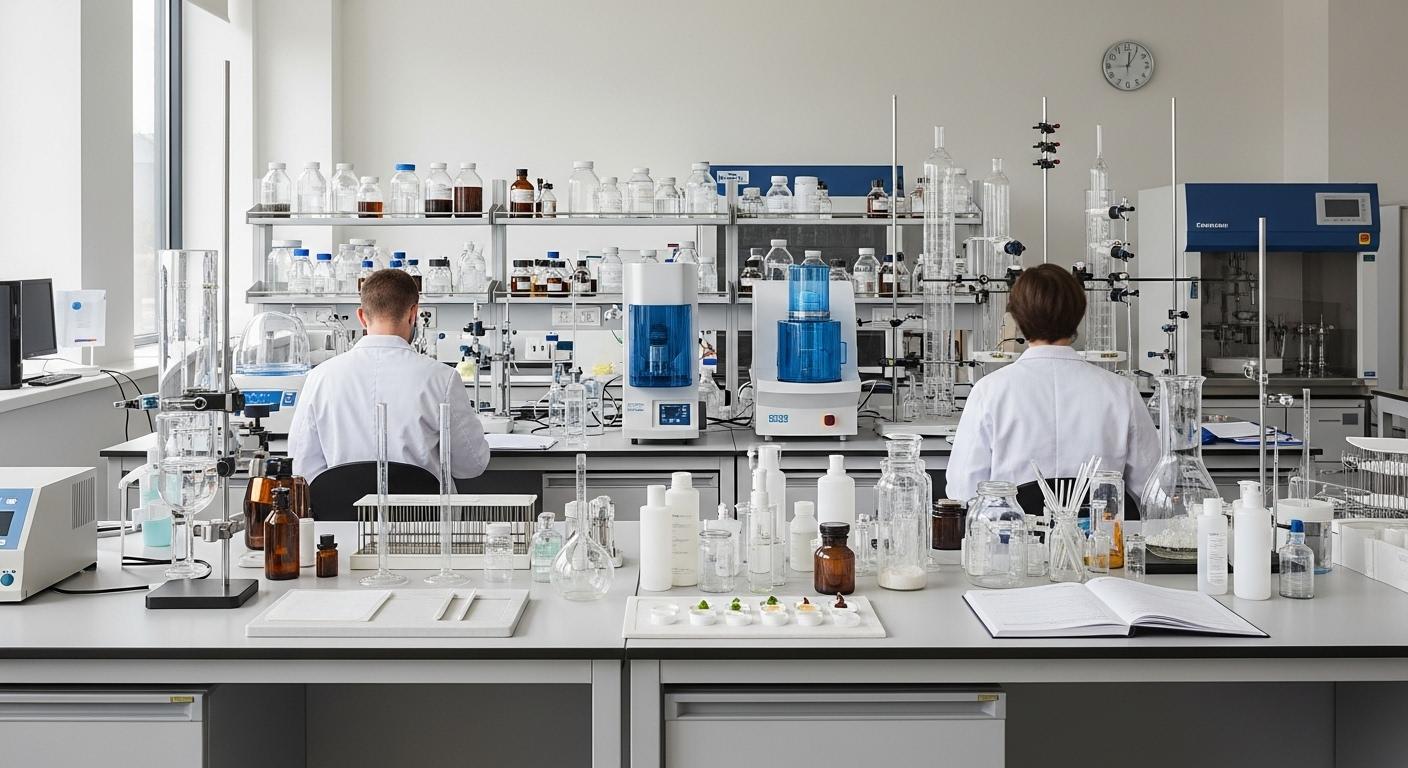
What propels a truly remarkable cosmetics laboratory today? The blend of scientific precision, ethical rigor, and inventive play defines not only safe and effective skincare but also resets industry norms for trust and ecological responsibility. You sense it even before entering: these spaces do not negotiate with compromise. Expectations rise—modern laboratories surge ahead, setting both the bar and the pace for results you truly feel on your skin.
The laboratory at the heart of your routine
How does a face cream evolve from a shelf product into a daily ritual that earns your confidence? Everything begins away from beauty aisles, in quiet rooms where researchers, chemists, and engineers dismantle old limits. Urgency becomes the new rhythm: nobody waits for delayed effects, transparency appears instantly, and the demands press on—visible transformation, real safety, and zero tolerance for guesswork. If you thirst for concrete answers, Click to access opens the doors to see a team engaged not just in technology, but in the pursuit of demonstrable change. You watch them: energy jolts through each project, proof accumulates in secure archives, and external experts challenge every claim. Six-month waiting times for results? Gone. Brands want records, not stories.
Also read : Boosting student involvement: creative gamification techniques for uk schools and universities
The evolution of laboratories?
In earlier times, formulas emerged from whispered trials and hands that blended creams by instinct. Regulations then stiffened, electron microscopes entered, and standardized methods forced traditionalists to adapt. Faces changed: from Paris workshops to sprawling Seoul innovation hubs, the cast rotated—machines replaced hands, digital screens replaced notepads. Today, formulations appear almost overnight. You sense the speed, see pressure from consumers constantly comparing, while brands act fast to avoid missteps. The skin care world now orbits technology, not guesswork. Since 2010, digital tools have upgraded 68% of workflows—no exaggeration, real industry numbers. Every bottle collects a story of recalibration.
| Period | Signature Technology | Impact on Formulation |
|---|---|---|
| 1960s | Manual chemical synthesis | Artisan serums, slow processes, first discoveries |
| 1990s | Partial automation, HPLC | Rising precision, stronger safety controls |
| 2010-2019 | Artificial intelligence, high-throughput screening | Active ingredient leaps, rapid launches, anti-aging boom |
| 2025 | Biotechnologies, 3D skin modeling | Personalization, efficiency driven to extremes |
The missions inside a modern cosmetics laboratory
Every formula begins as an ambition. Teams assemble lists, chase a goal (hydration, glow, defense against pollution?) and test combinations—hundreds, often, before satisfaction even whispers. Then reality checks bite: will texture remain intact, will scent persist, does efficacy hold up? Mistakes do not last: each testing round exposes weaknesses, instills caution, sometimes demands a total restart. Nobody gets bored here. Dermatologists, toxicologists, and digital watchdogs chase down weaknesses. To unlock daring textures, micro-encapsulation and lipid carriers enter the game. Every decision lands in a controlled archive, often digital, sometimes still paper. When you read an INCI list, you decode a saga of perseverance.
This might interest you : Creative approaches for uk music venues to effectively market upcoming virtual concerts
The place of scientific research and invention
Every new molecule emerges from discipline, not hope. Selection gets scrutinized, with ethical sourcing dominating discussions—no vague sourcing, no shortcuts. Ingredient managers cross-check global databases, test prototypes for touch, look, and interaction minute by minute. Timelines tighten; surprises trigger restarts, yes, full relaunches. Drama, anxiety, debates—routine in these labs.
The process of creation?
A fresh formula is never accident. Everything follows a cycle: validated supplies, a prototype shaped for reality, a demand for lifelike, pleasant feel. Compatibility tests flow into stability assessments, then clinical studies—volunteers arrive in droves, guarded by oversight. French laboratories alone process thousands of prototypes each year, but only a few survive scrutiny. If failure looms near the finish, tensions spike and adjustments sometimes rewrite months of labor.
The shift brought by advanced technology
Glance inside any state-of-the-art laboratory, tradition fades. Algorithms now review ingredient lists in seconds. Artificial intelligence simulates skin, predicts reaction to stress, even invents sensations that blend comfort and intrigue. High-speed platforms generate sample series—humans watch, robots produce.
Personalized skincare moves from notion to normal. Technology transforms trial and error, delivering what feels like intuition but runs on code.
Goodbye to animal testing—labs bet on 3D-printed human skin to monitor responses. Corporations invest heavily: biotech and digital merge, every product reflects data, not guesswork. That ultra-soothing serum in your drawer springs not from chance, but from a revolution inside the lab.
The compliance with quality and regulatory standards in a skincare laboratory
Rules shape the sector: Europe’s Regulation CE N° 1223/2009, the FDA in the United States, local authorities in China. No flexibility—full documentation covers methods, materials, and oversight; teams trace every item from source to shelf. ISO 22716, the gold standard, defines who enters global markets. Dedicated teams (legal, quality control, archives) run invisible but vital networks. One slip, and months of work sink beneath notice.
| Region | Main Regulation | Required Documents |
|---|---|---|
| Europe | CE N° 1223/2009 | Product Information File, safety review |
| United States | FDA Cosmetic Regulations | Ingredient controls, manufacturing affidavit |
| Asia | NMPA China | Test evidence, regulatory form |
The importance of tests and seals
A seal such as ISO 22716 changes the stakes. Good manufacturing practice (GMP) status opens exports in Asia and unlocks shelves across the US. People trust what seals promise and repeat it to their networks. Brands want multiple backstops: clinical checks, toxicology, microbiological screens all clear the path. No launch—whether from titans or tiny creatives—succeeds without solid proof. Independent safety validators? Now central to the contract wars.
The hunt for sustainable and ethical processes among laboratory experts
You sense it: green chemistry moves out of the margins and shifts mainstream. Sourcing prioritizes renewables, favors community-based supply, shrinks carbon footprints from the field to production floor. Manufacturing routines shrink water consumption, recover heat, even reuse packaging. And every part feels lighter, even visually; recycling explodes, and waste drops according to recent industry audits by a third or more. Labs that wave the sustainability flag build alliances that nudge industry giants to keep up.
How ethical commitment transforms daily work?
Do animal testing debates still rattle you in 2025? Labs with cruelty-free credentials or transparent supply chains leave an impression. Ingredient suppliers must identify every source, sign contracts for clarity. Fair pay across the board—from farmer to scientist—shapes loyalty. Change pushes forward, quarter by quarter, more buyers side with verifiable ethics and traceable claims. Personal anecdote? Marie steers her team through the stress of a new sunscreen launch; she excludes all controversial filters, and after repeat safety exams, her phone pings—a dermatologist confirms zero irritation in trial groups. The lab erupts with laughs and a mix of pride and relief. Within days, overseas partners engage, orders soar. These moments, yes, they replay on anxious nights, and sometimes spark entire waves of progress.
The influence of laboratory expertise on your skin
How does a cream surprise you with a sensation that feels instant, with softness or repair that pushes skepticism aside? Rigor sits at the root, not marketing. Research teams trim rough edges at each phase, aiming for less than two percent irritation—real numbers, documented, not boasts. Every batch gets double scrutiny, photo-documented, compared for consistency. Safety slides into expectation. Technical reports circulate, and brands stop hiding results.
Which alliances set the rhythm for innovation?
Heavyweights like L’Oréal, Shiseido, and Chanel pick their expert partners based on boldness and credibility. Smaller challengers spark buzz online, building ethos through transparency. Collaboration energizes the pond: limited editions, joint R&D, fresh invitations. Big and small brands see trust blurring into more sales. Many recent green launches emerge directly from artful alliances between labs and inspired storytellers.
- Products reflect years of quiet investment and preparation
- Certification shields become trust currencies for brands and buyers
- Shared R&D opens the door to quick market arrivals
- Ethics rewrite both lab routines and your shopping decisions
Modern skincare stimulates, provokes, and never slips into boredom. You demand formulas that hydrate, defend, comfort, and respect your convictions, often simultaneously. Why settle for less, when so much effort swirls behind every pump, jar, or drop of your favorite care?